Mattresses, Tandas, and Gold Rings: Where Latin Americans Really Keep Their Wealth
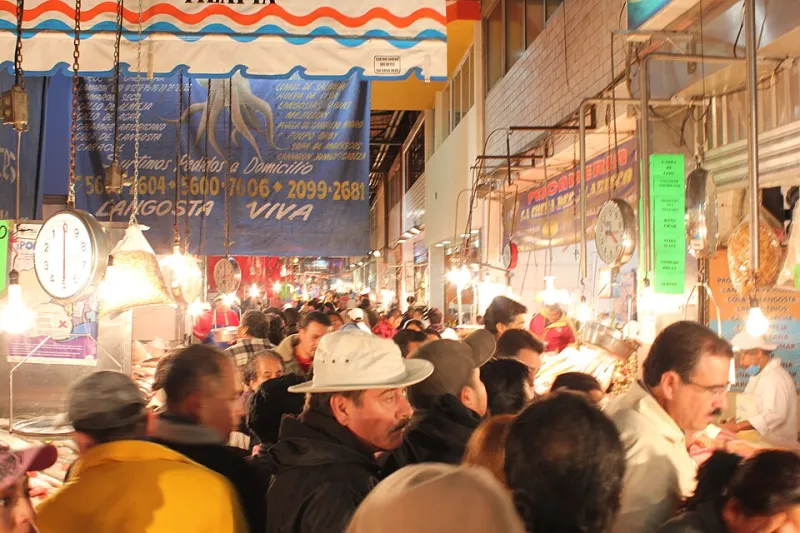
Photo: John Espinoza, CC BY-SA 3.0, via Wikimedia Commons
Ask a financial services executive in São Paulo, Mexico City, or Bogotá where their customers save money, and you will receive a confident answer involving savings accounts, pension contributions, and perhaps a growing interest in investment apps. Ask the customers themselves, and the answer is considerably more complicated—and considerably more revealing.
At IDCL Latin Survey, we have spent considerable research effort examining the gap between institutional assumptions and actual consumer behavior in Latin American financial life. What we have found challenges some of the most deeply held beliefs in the regional banking and fintech sectors, and carries direct implications for US financial firms eyeing Latin American expansion.
The Trust Deficit That Never Fully Healed
To understand where Latin Americans store wealth, it helps to understand why so many remain reluctant to store it in conventional banks. The region's financial history is punctuated by crises that wiped out ordinary depositors: Argentina's 2001 corralito, which froze bank accounts and converted dollar savings into devalued pesos overnight; Brazil's inflation episodes of the 1980s and early 1990s, when purchasing power eroded faster than interest rates could compensate; Mexico's 1994 peso devaluation, which devastated middle-class savers who held peso-denominated instruments.
These events did not merely cause short-term financial pain. They produced lasting behavioral imprints. IDCL Latin Survey's consumer research, conducted across seven Latin American countries in 2024, found that 43 percent of respondents over the age of 45 reported that personal or family experience with a banking crisis had directly influenced their current savings behavior. Among that group, 67 percent said they deliberately maintained significant financial reserves outside the formal banking system.
For US financial firms accustomed to operating in an environment where FDIC insurance and regulatory stability are taken as baseline assumptions, this context is not merely historical background. It is the operating condition of the market.
The Tanda Economy: Informal Credit Clubs at Scale
Perhaps no financial instrument better illustrates the gap between institutional offerings and consumer preference than the tanda—known by different names across the region (cundina in Mexico, pandero in Peru, natillera in Colombia, vaquinha in Brazil). At its core, a tanda is a rotating savings and credit association: a group of trusted individuals each contribute a fixed amount periodically, and each member receives the full pool on a rotating basis.
Financial economists have studied tandas for decades, often treating them as a workaround for populations excluded from formal credit. Our survey data suggests that framing misses something important. Among respondents who participate in tandas, 38 percent also hold formal bank accounts. Participation in informal savings clubs is not, in many cases, a substitute for banking. It is a preferred complement to it—one that offers social accountability, zero fees, and a forced savings discipline that many respondents said formal products failed to replicate.
When IDCL Latin Survey asked tanda participants what would cause them to shift that savings behavior into a formal financial product, the most common response—cited by 54 percent—was not better interest rates or digital convenience. It was trust, defined specifically as confidence that the institution would not restrict access to their funds during an economic downturn.
That answer should give US fintech companies pause as they design Latin American product roadmaps.
Physical Assets as Monetary Policy Hedges
Beyond informal credit clubs, our research documents a widespread and deliberate preference for physical assets as savings vehicles—particularly among lower- and middle-income consumers. Gold jewelry occupies a distinctive position in this landscape. In Mexico, Peru, and Bolivia especially, gold rings, chains, and earrings function not merely as adornment but as liquid, portable stores of value that can be pledged at pawnshops (casas de empeño) or sold through informal networks when cash is needed.
This is not incidental behavior. Survey respondents in our 2024 study who identified as active savers—meaning they reported deliberately setting aside money each month—were asked to list all the forms in which they stored savings. Physical gold or jewelry was cited by 29 percent of this group, a figure that exceeded participation in employer-sponsored retirement plans (22 percent) among the same cohort.
Real estate microinvestment represents another dimension of this pattern. Across the region, consumers with modest incomes engage in incremental property investment—purchasing a small plot of land, adding construction in stages over years, or acquiring fractional ownership in family property—as a primary wealth-building strategy. These transactions frequently occur outside formal property registration systems, which means they are largely invisible to financial institutions attempting to assess household balance sheets.
What the Data Means for US Financial Firms
For US banks, asset managers, and fintech platforms evaluating Latin American market entry or expansion, the behavioral portrait that emerges from IDCL Latin Survey's research carries specific strategic implications.
First, product design that prioritizes yield over liquidity will consistently underperform. Latin American consumers with experience of financial crises place an outsized premium on access—the ability to retrieve funds quickly and without institutional interference. Savings products that impose lock-up periods or withdrawal penalties face a structural disadvantage in this market, regardless of their return profile.
Second, the tanda model contains genuine design intelligence that formal financial products have not successfully replicated. The social accountability mechanism, the zero-fee structure, and the predictable payout cycle are features, not bugs. US firms that attempt to digitize tanda-like behavior—rather than simply replacing it with conventional savings accounts—are more likely to achieve meaningful adoption.
Third, the prevalence of physical asset savings suggests that wealth management conversations in Latin America need to begin differently than they do in US domestic markets. Advisors who open with stock portfolios and mutual funds are speaking to a consumer whose mental model of wealth storage is a gold ring in a dresser drawer or a concrete-block room added to a family home. Bridging that gap requires cultural fluency that goes well beyond language translation.
The Survey's Core Finding
The overarching conclusion from IDCL Latin Survey's research into Latin American savings behavior is straightforward, if uncomfortable for institutions that have long assumed the market simply needs better financial education: Latin American consumers are not confused about money. They have developed sophisticated, rational responses to institutional environments that have repeatedly failed them.
The financial products that will succeed in this market are not those that assume consumers need to be taught to save. They are the ones that earn the trust that informal networks have already secured.