Devoted to the Brand, Indifferent to the Channel: Decoding Latin America's Loyalty Paradox
If you handed a seasoned US retail strategist the results of IDCL Latin Survey's latest omnichannel behavior study, they would likely read the data twice. On one page, they would find evidence of brand attachment rates that rival the most loyal consumer segments in developed markets. On the next page, they would find channel-switching frequencies that look more like a consumer in active crisis than one with stable purchasing habits. Both pages describe the same shopper.
This is the loyalty paradox—and it is one of the most commercially significant behavioral patterns in Latin American consumer markets today.
The Survey Findings in Plain Terms
IDCL Latin Survey conducted structured interviews and behavioral tracking surveys with 9,400 respondents across six countries—Mexico, Brazil, Colombia, Argentina, Chile, and Peru—between Q3 2023 and Q1 2024. Respondents were asked to map their purchasing journeys across product categories including personal care, apparel, electronics, and household consumables.
The brand fidelity numbers are striking. Across all six markets, 67 percent of respondents reported purchasing the same brand in their primary product categories for three or more consecutive years. In personal care specifically, that figure rises to 74 percent. These are not passive default purchases driven by limited choice—respondents consistently cited emotional connection, trusted quality, and family recommendation as the reasons they return to specific brands. These are durable, affect-driven loyalties.
The channel behavior data tells a completely different story. In the same survey, 71 percent of respondents reported purchasing their preferred brand from at least three distinct retail channels within the past 12 months. Forty-four percent had used five or more channels—ranging from brand-owned e-commerce to WhatsApp-based informal vendors to physical supermarkets to social commerce platforms. Crucially, they did not experience this as inconsistency. To them, getting their preferred brand through whatever channel was most convenient at that moment was a unified, coherent consumer behavior.
Why Western Loyalty Program Frameworks Fail Here
The standard US loyalty program model—accumulate points through a designated channel, redeem rewards within that channel's ecosystem, and generate stickiness through switching costs—rests on an implicit assumption: that the consumer wants to consolidate their purchasing behavior into a single, trackable relationship with a retailer.
Latin American consumers, on the whole, do not want that. The cultural and structural context in which they shop actively militates against it.
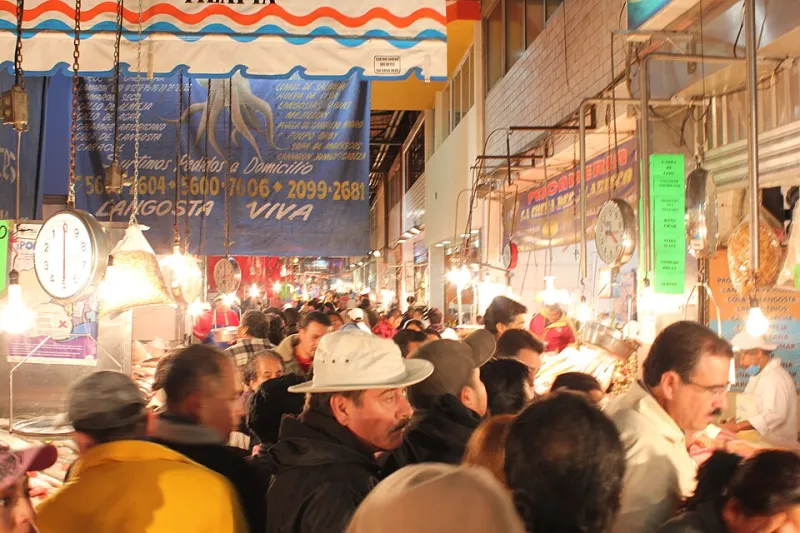
First, consider the role of informal retail. In Mexico, Brazil, and Colombia, a substantial share of everyday consumer purchases—including branded goods—moves through channels that are invisible to formal loyalty program infrastructure: tienditas, mercados, neighborhood WhatsApp groups, and informal resellers who source products from cash-and-carry wholesale outlets. IDCL Latin Survey estimates that between 28 and 41 percent of branded consumer goods purchases in these three markets involve at least one informal-channel touchpoint per year. A loyalty program that cannot see those transactions cannot accurately model that consumer's relationship with the brand.
Second, price volatility in several Latin American economies—particularly Argentina and, to a lesser extent, Colombia and Mexico—has conditioned consumers to treat channel selection as a tactical, moment-by-moment decision rather than a habitual one. When the same product varies in price by 15 to 30 percent across channels in a given week due to currency fluctuations, import costs, or promotional cycles, rational consumers learn to be channel-fluid. That behavior persists even when macroeconomic conditions stabilize, because it has been reinforced across years of lived experience.
Third, social commerce has created an entirely new category of purchase occasion that traditional loyalty frameworks have not absorbed. In Brazil, Instagram and WhatsApp collectively drive a measurable share of consumer goods transactions that originate in peer recommendation and close with a direct message to a seller. These transactions are brand-specific—the consumer knows exactly what they want—but they are channel-agnostic by design.
What Actually Builds Resilience in This Market
The companies that perform best with Latin American consumers have, whether intentionally or by necessity, decoupled their loyalty strategies from channel control. Rather than trying to funnel consumers into a single purchasing pathway, they invest in making the brand itself the constant—the one recognizable, trustworthy element in an otherwise fluid commercial environment.
IDCL Latin Survey's qualitative research identifies several specific mechanisms that reinforce brand loyalty independent of channel.
Consistent product experience across all purchase points is the most fundamental. When a consumer buys a product through a formal retailer and then again through an informal vendor, and the product performs identically both times, the brand earns credibility that no loyalty program can manufacture. Conversely, when counterfeit or gray-market goods degrade that experience, brand equity erodes rapidly—and the consumer often blames the brand rather than the channel.
Community-based brand presence functions as a loyalty mechanism in ways that app-based programs do not. Brands that invest in local sponsorships, neighborhood-level activations, and participation in cultural moments—rather than purely transactional digital engagement—build the kind of emotional attachment that our survey data shows is already present in the market. They are not creating loyalty; they are giving existing loyalty a place to live.
Flexible redemption ecosystems that function across channels—including offline and informal ones—outperform closed-loop reward systems in our data. Several regional brands have experimented with SMS-based reward codes that work regardless of where a product was purchased. The mechanics are less sophisticated than a full digital loyalty stack, but they meet the consumer in the environment where she actually shops.
The Strategic Reframe US Companies Need
For US brands accustomed to thinking about loyalty in terms of app downloads, member accounts, and first-party data capture, Latin America requires a conceptual adjustment that can feel counterintuitive. The goal is not to own the channel relationship. The goal is to be the brand the consumer insists on finding—through whatever channel is available.
That shift in orientation changes where investment flows. It prioritizes brand-building over channel exclusivity, product consistency over programmatic rewards, and cultural fluency over technological sophistication. None of those priorities are exotic or particularly difficult to execute. They simply require US companies to take the survey data seriously—and to resist the temptation to impose frameworks designed for different consumers onto a market that has already developed its own perfectly coherent commercial logic.