Fake Goods, Real Consequences: What Survey Data Reveals About Counterfeit Culture and Consumer Trust Across Latin America's Retail Sector
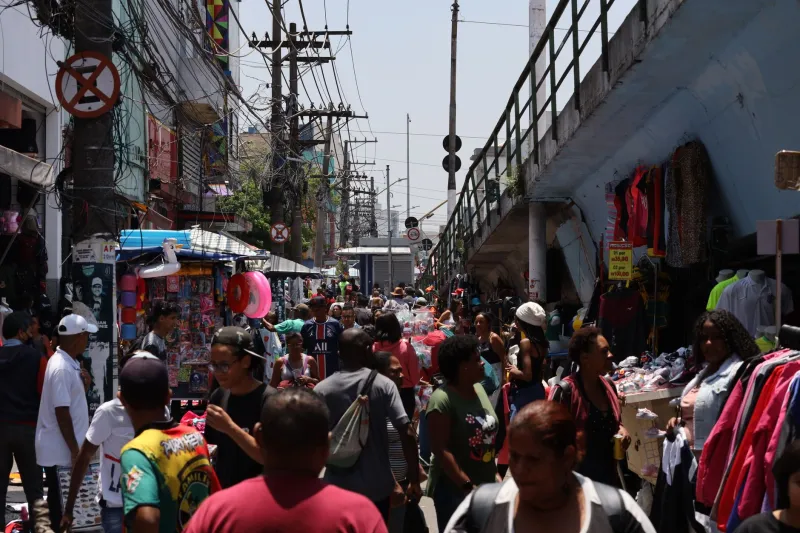
The word "counterfeit" conjures a specific image for most American executives: a trench-coated vendor, a back alley, a transaction conducted in low light. That image is not merely incomplete when applied to Latin America — it is actively misleading. Across the region's $180 billion retail landscape, fake and parallel-market goods occupy shelf space in semi-formal stores, circulate through family networks, and in some product categories account for the majority of units sold. Understanding this reality is no longer optional for US brands with regional ambitions.
IDCL Latin Survey conducted structured interviews and quantitative polling across São Paulo, Mexico City, Bogotá, Lima, Buenos Aires, Santiago, and Santo Domingo, gathering responses from 4,200 adult consumers. The core question was deceptively simple: when you buy something you suspect may not be authentic, what are you actually thinking? The answers were far more sophisticated than the question implied.
The Normalization Gap
Across all seven cities, 61 percent of respondents reported having purchased a product they believed was counterfeit or of uncertain provenance within the past twelve months. That figure alone would concern most brand managers. What should concern them more is the attitudinal data underneath it.
When asked whether buying a counterfeit product made them feel negatively about the original brand, only 23 percent said yes. The majority — 54 percent — reported feeling neutral, while a striking 18 percent said the experience actually increased their interest in eventually purchasing the authentic version. This is the normalization gap: the distance between how US brands assume counterfeit exposure damages their equity and how Latin American consumers actually process that exposure.
In practical terms, this means that for a significant portion of the consumer base, interacting with a fake product functions less like brand damage and more like a form of extended sampling. The counterfeit market, in this reading, operates as an involuntary trial mechanism — one that legitimate brands are neither funding nor controlling.
Price Sensitivity Is the Wrong Frame
The instinctive explanation for counterfeit consumption is poverty. Consumers buy fakes because they cannot afford the real thing. While income constraints are genuinely relevant, our data suggests that framing the issue purely through price sensitivity misses a more nuanced dynamic.
Among respondents in the upper-middle income bracket — households earning above the 70th percentile in their respective cities — counterfeit purchase rates were only marginally lower than the regional average: 53 percent versus 61 percent overall. More telling, when this cohort was asked why they had purchased a counterfeit item most recently, only 31 percent cited price as the primary driver. The more common answers were convenience (38 percent), product availability (17 percent), and, notably, indifference to authenticity for that specific category (14 percent).
This last finding deserves particular attention. Consumers are not uniformly concerned with authenticity across all product types. Pharmaceuticals and infant products scored highest on authenticity priority — 89 percent and 91 percent, respectively. Electronics and apparel scored considerably lower, with 44 percent and 38 percent of respondents indicating that authenticity was "very important" in those categories. For US brands, this means that the strategic response to counterfeiting must be category-specific rather than brand-wide.
The Retailer Opportunity Hiding in Plain Sight
Here is the finding that most surprised us during analysis: the counterfeit economy, rather than simply cannibalizing legitimate retail, appears in several markets to be actively seeding demand for it.
In Bogotá and Lima, we identified a consumer segment we have labeled "aspirational converters" — shoppers who began their relationship with a brand category through counterfeit products and subsequently migrated toward authentic purchases as their income or priorities shifted. This segment represented 19 percent of our sample in those two cities. Among them, 72 percent reported that their initial counterfeit exposure had directly influenced their decision to seek out the genuine product.
For legitimate retailers, this represents a concrete acquisition pathway that currently goes unaddressed. No major US brand operating in these markets has, to our knowledge, developed a formalized strategy for converting aspirational counterfeit consumers into paying customers. The data suggests that doing so could represent a meaningful revenue opportunity, particularly in apparel, footwear, and personal electronics.
What Brands Are Getting Wrong
The predominant US brand response to counterfeiting in Latin America has been legal and enforcement-oriented: cease-and-desist campaigns, customs interceptions, coordination with local authorities. These efforts are not without merit, but they operate on the assumption that eliminating supply will resolve the problem. Our survey data indicates that demand-side dynamics are considerably more durable.
When consumers who had recently purchased a counterfeit product were asked what would have caused them to choose the authentic version instead, the top three responses were: lower price point for authentic goods (47 percent), greater availability in accessible retail locations (33 percent), and clearer communication of why authenticity matters for that specific product (21 percent). Enforcement activity appeared nowhere in the top ten responses.
This is a distribution and positioning problem, not a legal one. US brands that invest exclusively in supply-side suppression while neglecting to compete on accessibility and value communication are solving for the wrong variable.
Toward a Data-Informed Response
The counterfeit landscape in Latin America will not be legislated or litigated away in any timeframe relevant to near-term business planning. What can change is how US brands position themselves relative to it.
Our survey data points toward three actionable priorities. First, segment consumers by authenticity sensitivity rather than by income, since the correlation between the two is weaker than assumed. Second, invest in retail presence in the informal and semi-formal channels where counterfeit exposure is highest — not to compete with fakes directly, but to intercept the aspirational converter at the moment their preferences are forming. Third, develop category-specific messaging that explains the concrete value of authenticity in terms consumers find credible, particularly in categories where the perceived risk of inauthenticity is low.
The counterfeit economy in Latin America is neither a temporary anomaly nor an insurmountable barrier. It is a structural feature of the retail environment that contains, within its complexity, real data about what consumers value and what they are willing to pay for. Brands that learn to read that data will find opportunities that brands focused exclusively on enforcement will continue to miss.