Sold Through a Chat, Delivered by a Neighbor: The Informal Commerce Networks Rewriting Latin America's Retail Rules

Imagine building a retail strategy for a market where a significant share of consumer transactions leaves no platform data, no digital payment trail, and no record in any system your analytics team can access. That is not a hypothetical challenge for US brands entering Latin America — it is the operational reality. And the brands that have not yet grappled with it are, in all likelihood, significantly underestimating both the competition they face and the market share they are failing to capture.
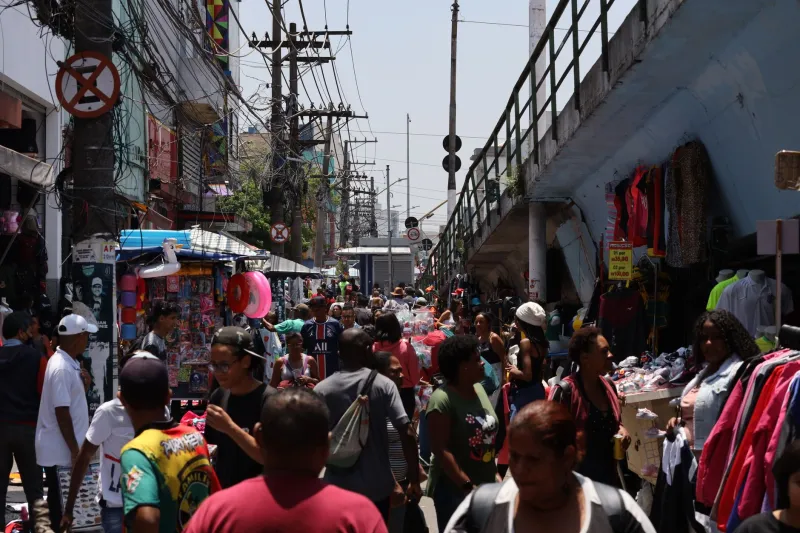
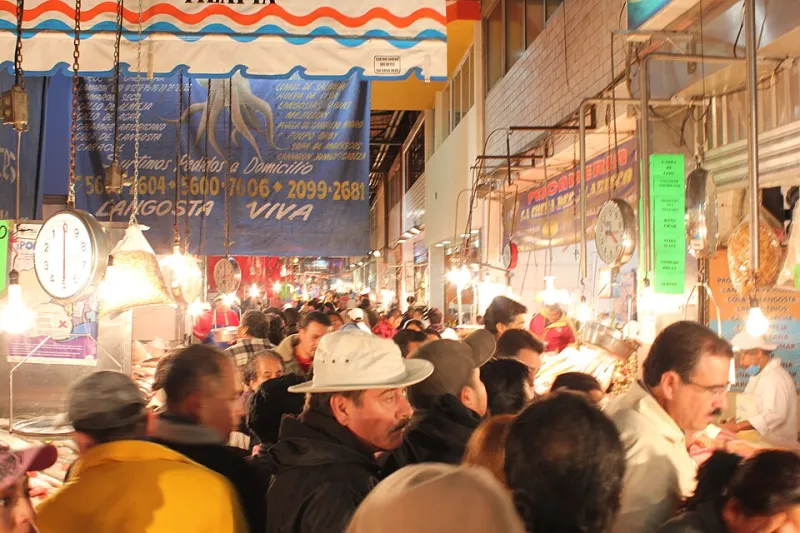
The infrastructure through which Latin American consumers discover, negotiate, purchase, and receive goods has evolved along a trajectory that diverges sharply from the US experience. Where American digital commerce consolidated around a small number of dominant platforms — Amazon, Walmart's digital properties, Shopify-powered storefronts — Latin American commerce fragmented into a dense, decentralized mesh of messaging applications, short-form video channels, and community-based trust networks. The result is an ecosystem that is, by conventional measurement standards, nearly invisible. By any reasonable estimate of economic activity, it is enormous.
IDCL Latin Survey conducted observational research and structured interviews across six markets — Mexico, Brazil, Colombia, Peru, Ecuador, and the Dominican Republic — specifically designed to document how informal social commerce functions at the transactional level. What follows is a synthesis of those findings.
WhatsApp as Commercial Infrastructure
In the United States, WhatsApp is a messaging application used primarily for personal communication. In Latin America, it is something closer to a commercial operating system.
Our research documented WhatsApp group chats functioning as product catalogs, order management systems, customer service channels, and payment coordination tools — simultaneously. A typical small-scale vendor in our sample maintained between three and eleven active buyer groups, each serving a distinct customer segment: one for family and close friends, one for a neighborhood network, one for professional contacts, and so on. Products were presented through image messages and voice notes. Pricing was negotiated through direct messages. Delivery was confirmed through a follow-up in the group thread.
Among the vendors we interviewed, 78 percent reported that WhatsApp was their primary or sole sales channel. Among their customers, 64 percent reported making at least one purchase per month through a WhatsApp-based seller. In several product categories — homemade food, cosmetics, clothing, and household goods — WhatsApp-mediated transactions appeared to represent the dominant purchasing channel for the demographic segments we surveyed, outpacing both traditional retail and formal e-commerce platforms.
This has direct implications for US brands. The share-of-wallet data that informs most US market entry models is built on formal channel reporting. If a substantial portion of consumer spending in a given category flows through WhatsApp transactions that never appear in platform data, the addressable market calculation is wrong — and the competitive landscape is missing its most active participants.
TikTok as the Discovery Layer
If WhatsApp is where transactions close, TikTok is increasingly where purchase intent originates. The platform's penetration across Latin American youth demographics is well-documented, but its commercial function is less widely understood outside the region.
In our survey sample, 41 percent of respondents aged 18 to 34 reported discovering a product through TikTok content in the prior 30 days. Of that group, 67 percent reported subsequently purchasing the product — but only 22 percent completed that purchase through TikTok's own commerce features or a linked external retailer. The remaining 78 percent traced the purchase to an informal channel: a WhatsApp conversation initiated with the creator or a reseller, a direct Instagram message, or a word-of-mouth referral generated by sharing the video with a family or community network.
This discovery-to-transaction gap is the critical blind spot in most US DTC playbooks applied to Latin America. A brand may invest heavily in TikTok content that generates genuine product interest and measurable engagement. But if the conversion pathway that consumers actually prefer runs through informal channels the brand neither monitors nor participates in, the attribution model will record those conversions as organic or untracked — or miss them entirely.
Creators themselves are often the fulcrum of this ecosystem. In our research, micro-creators with between 5,000 and 50,000 followers frequently functioned as de facto distributors, earning commissions not through formal affiliate programs but through personal resale arrangements negotiated directly with suppliers or importers. The commercial relationship was real and financially meaningful — it simply occurred entirely outside any platform's visibility.
The Trust Architecture That Replaces Institutional Guarantees
Formal e-commerce in the United States operates on institutional trust: payment processors guarantee transactions, platforms enforce return policies, and brand reputation is mediated through review systems. Latin American informal commerce operates on a different trust architecture — one built on personal relationships, community reputation, and social accountability.
When we asked consumers why they preferred purchasing through informal WhatsApp-based sellers rather than formal platforms, the most common responses were not about price. They were about trust. Sixty-one percent cited knowing the seller personally or through a trusted referral. Forty-four percent cited the ability to negotiate directly and ask questions before committing. Thirty-seven percent cited flexibility in payment arrangements — including installment agreements negotiated informally between buyer and seller, a practice that formal platforms cannot easily replicate.
For US retailers, this trust architecture presents a genuine structural challenge. The institutional guarantees that underpin American consumer confidence — buyer protection programs, standardized return policies, secure payment processing — are not irrelevant to Latin American consumers, but they do not substitute for the relational trust that informal commerce networks provide. A brand entering these markets with a polished DTC website and a robust customer service operation is competing, in part, against a seller who is the buyer's cousin's neighbor and who will accept a partial payment until payday.
What This Means for US Market Entry
The informal social commerce ecosystem in Latin America is not a problem to be solved. It is a structural feature of the market that any credible entry strategy must account for. The brands that will succeed in capturing meaningful share are not those that attempt to redirect consumers toward formal channels — that effort has been tried, repeatedly, with limited results — but those that develop genuine fluency in how informal networks function and find ways to participate in or alongside them.
Concretely, this means several things. It means building creator relationships not only at the macro-influencer level but among the micro-creator reseller networks that drive actual conversion. It means designing products and packaging for the WhatsApp catalog format — images that communicate clearly in small thumbnails, descriptions that work as voice note scripts. It means accepting that a portion of sales volume will flow through channels that generate no first-party data and building research methodologies, like those employed by IDCL Latin Survey, that can measure informal market activity independently.
Most fundamentally, it means abandoning the assumption that Latin American consumers will eventually migrate toward the commercial behaviors that US brands find easiest to serve. The data is consistent and unambiguous on this point: the informal social commerce infrastructure is not a transitional phase. It is the destination. US brands that arrive prepared to operate within it will find a market far larger than the platform metrics suggest.